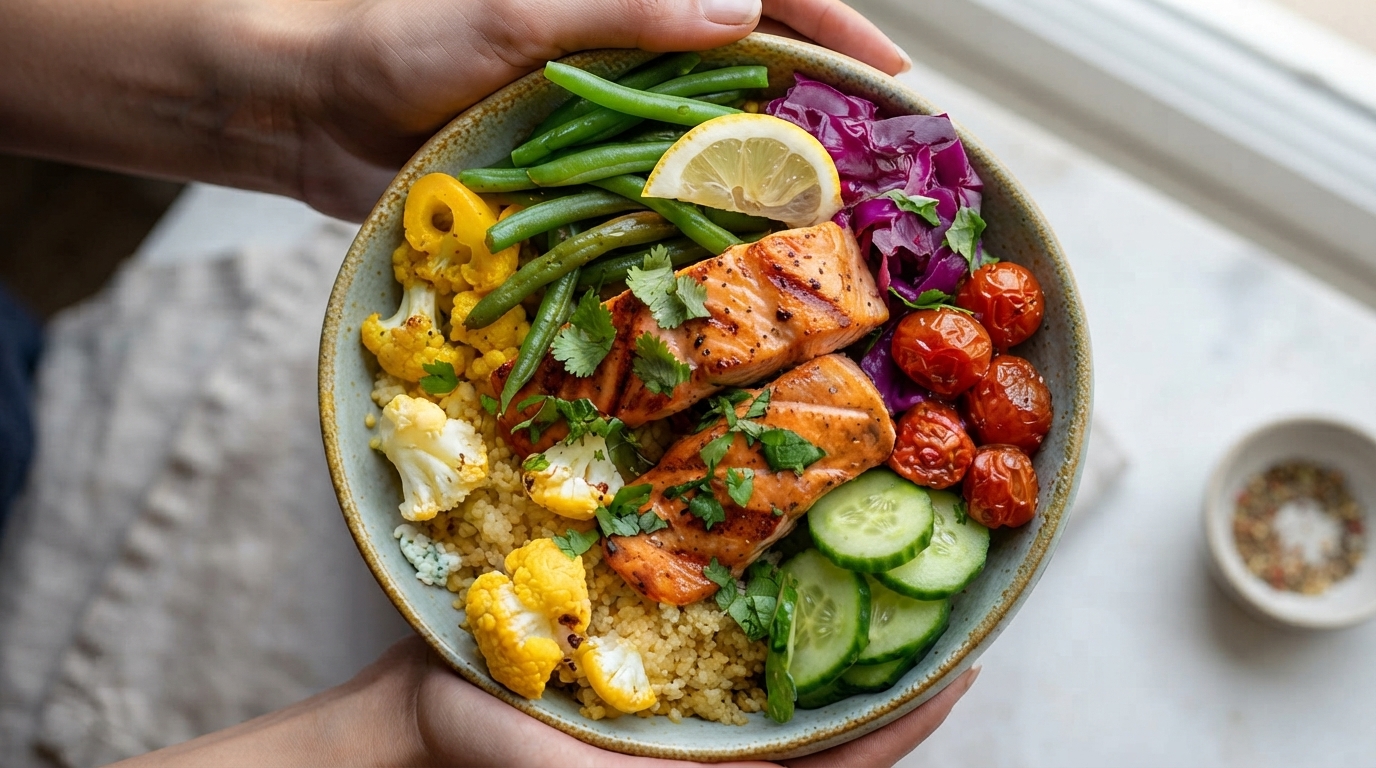
“Low-calorie” eating isn’t about tiny portions—it’s about lower calorie density. Foods with more water, fiber, and protein tend to deliver more fullness per calorie than foods that are dry, fatty, or highly refined. That’s why a big bowl of vegetables and lean protein can feel satisfying, while a small pastry can leave you hungry again an hour later.
A practical way to build meals is to aim for balance: protein + fiber + volume. Start by adding high-volume foods first (vegetables, fruit, broth-based soups), then include a solid protein portion, and finally round out the plate with a measured amount of carbs and fats. This “add before subtract” method helps meals feel abundant while naturally limiting the extras that raise calories fast—like heavy oils, creamy sauces, and cheese.
To keep weekdays easy, choose a couple of repeatable breakfasts and lunches you genuinely enjoy, then keep dinners flexible. Fewer daily decisions often leads to better consistency than chasing “perfect” variety.
When meals look and feel bigger, they’re easier to stick with. Stock your kitchen with staples that boost volume and flavor without piling on calories:
| Category | Best picks | Easy way to use | What to watch |
|---|---|---|---|
| Non-starchy veggies | Greens, zucchini, cauliflower, mushrooms | Double the veg in bowls, stir-fries, omelets | Hidden calories from oils and creamy dressings |
| Fruits | Berries, grapefruit, melon | Add to yogurt, smoothies, or as dessert | Dried fruit portions can add up fast |
| Protein (lean) | Chicken breast, turkey, white fish, tofu | Build meals around 20–35g protein | Breaded/fried coatings and sugary marinades |
| Carbs (fiber-forward) | Oats, beans, lentils, potatoes | Choose measured portions + veggies | Large portions and butter/cream toppings |
| Flavor boosters | Vinegar, citrus, herbs, salsa | Make quick sauces and marinades | Store-bought sauces often add sugar/sodium |
Protein is a powerful “stay full” tool, especially during weight loss, because it helps control hunger and supports muscle maintenance. Great options include chicken or turkey breast, tuna, cod, shrimp, egg whites (plus whole eggs), low-fat cottage cheese, Greek yogurt, tofu, tempeh, and plant proteins like beans and lentils.
To keep calories in check, choose lighter cooking methods: grilling, baking, air-frying, steaming, poaching, and quick stir-fries using minimal oil (and lots of vegetables). A helpful planning shortcut is building a weekly rotation—two or three animal proteins plus two plant options—so meals stay varied without complicated prep.
Carbs can absolutely fit into a low-calorie plan—especially the kinds that bring fiber and satisfaction. Think oats, quinoa, beans, lentils, sweet potatoes, and regular potatoes (boiled and cooled potatoes can be especially filling for some people). Whole-grain breads can work well too, as long as portions are measured.
Use the plate method as an easy visual: half vegetables, a quarter protein, a quarter carbs (adjust based on activity level, hunger, and goals). If you want a bigger-looking plate, swap the base: cauliflower rice, shredded cabbage, zucchini noodles, or mixed greens can cut calories while keeping volume high.
A simple trick that keeps meals feeling abundant is planning “two sides”: one high-volume vegetable plus one measured carb portion. You get the comfort of a starchy side without crowding out the foods that keep you full longer.
For a more structured, shop-and-cook routine, A Delicious Guide to Low-Calorie Diet Foods eBook can help streamline food choices and mix-and-match meals without guesswork.
Adjust portions based on hunger cues, training days, and medical guidance. For general healthy-eating frameworks, USDA MyPlate is a helpful reference.
If weight management is a goal, the CDC’s Healthy Weight resources and NIH MedlinePlus guidance offer practical, evidence-based overviews.
If daily movement is part of your plan, comfortable gear helps remove friction—supportive walking shoes like Alviero Martini Prima Classe Women’s Black & Coloured Sneakers can make it easier to stick with steps or quick errands. And when body measurements are changing, small wardrobe updates such as a Men’s 1.5 Inch Italian Leather Belt with Needle Buckle can help clothing fit comfortably during transitions.
Non-starchy vegetables, broth-based soups, lean proteins, and fiber-rich carbs (like beans, lentils, and oats) tend to be the most filling. Water and fiber add volume, while protein slows digestion and helps curb hunger between meals.
Use high-impact flavor boosters like herbs, spices, vinegar or citrus, salsa, mustard, garlic, ginger, and hot sauce. Keep cooking methods light (grill, bake, air-fry) and be cautious with sugary sauces and heavy oil pours.
Calorie needs vary by age, sex, body size, and activity level, so there isn’t one number that fits everyone. A sustainable calorie deficit that still supports adequate protein, fiber, and overall nutrition is typically more effective than an aggressive cut, and medical guidance can help personalize the target.












Leave a comment