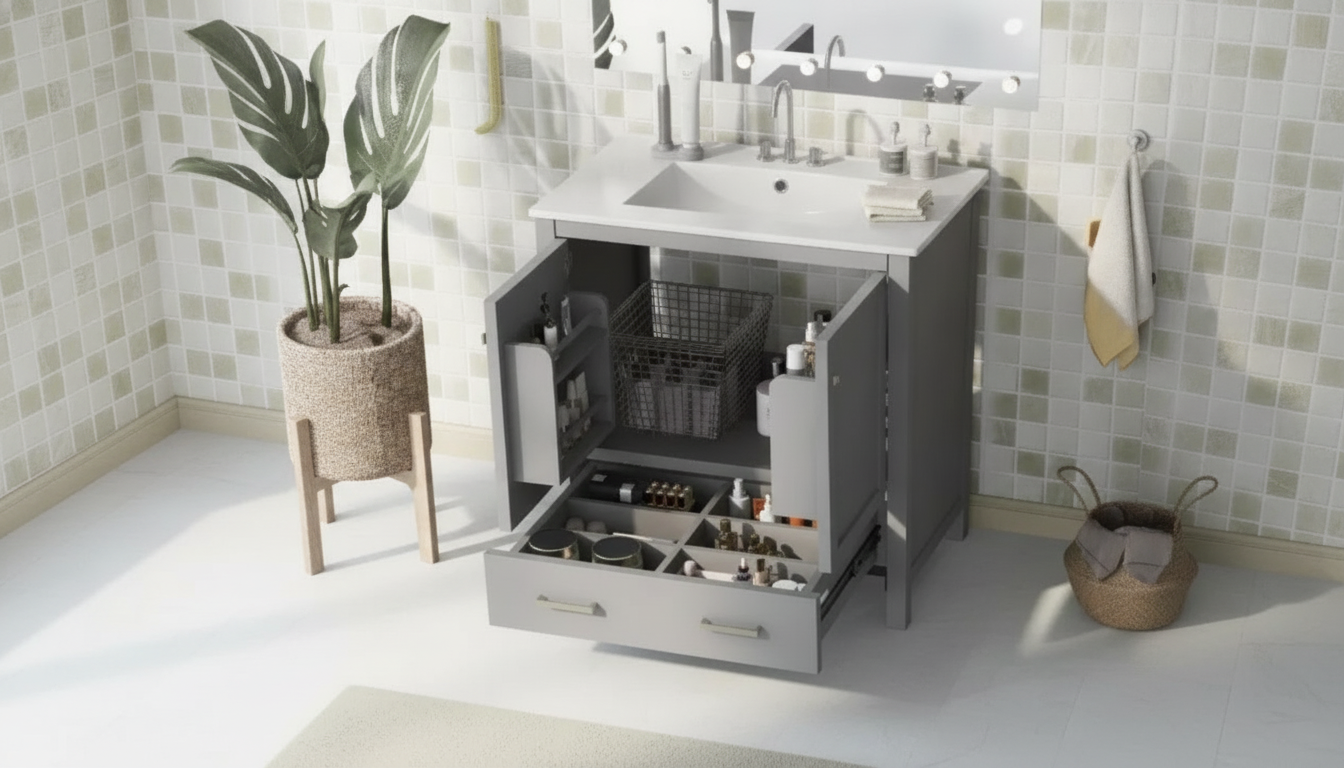
A 30-inch vanity hits a sweet spot for many homes: it’s compact enough for tighter floor plans, yet it still gives you a real countertop, a proper sink, and storage that a pedestal sink can’t match. If you’re looking at a drawer-and-cabinet vanity topped with a ceramic basin, the details that matter most are fit (clearances and plumbing), how the storage is laid out, and how easy it is to keep the basin and cabinet looking fresh with daily use.
For small-to-mid bathrooms, a 30-inch footprint often feels “just right.” It provides enough room to set down soap, toothbrushes, and skincare without crowding the sink, while still leaving breathing space in front of the toilet or tub.
A ceramic basin and a combination of drawers plus a cabinet is a practical setup for busy routines. The basin handles daily wear, while the storage helps keep the counter clear.
If you’re upgrading from a pedestal sink, the biggest day-to-day difference is that everything finally has a “home”—and the countertop stays clearer because you aren’t forced to store items out in the open.
Fit issues are usually avoidable with a few targeted checks. Beyond the vanity width, pay attention to trim, door swings, and where plumbing comes out of the wall or floor.
| What to measure/check | Why it matters | Quick tip |
|---|---|---|
| Wall-to-wall space where the vanity sits | Prevents gaps or forced fit | Measure at the floor and at countertop height |
| Depth from wall to front edge clearance | Ensures walking space and door/drawer operation | Leave comfortable passage in front of the sink area |
| Plumbing location (drain + water lines) | Avoids conflicts with drawers and shelving | Confirm whether supplies come up through the wall or floor |
| Door and drawer clearance | Prevents collisions with toilet, tub, or wall | Mock the swing/pull with painter’s tape on the floor |
| Mirror/lighting alignment | Improves usability and appearance | Center mirror to basin; keep lights clear of cabinet edges |
For water efficiency upgrades during a vanity refresh, it can also help to choose a faucet that meets recognized performance criteria, such as EPA’s WaterSense bathroom sink faucet guidance. If you’re tackling a broader layout update, general planning resources from organizations like the National Association of Home Builders (NAHB) can help you think through spacing and usability.
The best storage feels effortless: the drawer opens and the item you need is right there. A 30-inch vanity can stay surprisingly organized with a few simple habits.
For general cleaning and disinfecting best practices in the home, the CDC’s guidance on cleaning and disinfecting can help you choose safe, effective routines—especially in high-touch areas like sink handles and drawer pulls.
Glazed ceramic is generally stain-resistant, and most discoloration is surface buildup from soap residue or hard-water minerals. Regular wiping and non-abrasive cleaners usually keep it bright; for mineral deposits, address them early so they don’t accumulate.
It depends on the vanity’s internal layout and where your drain and supply lines are located. Before ordering, check whether the cabinet design provides clearance behind or around drawers, or if there’s space intended for plumbing routing.
A mirror roughly the same width as the vanity—or slightly narrower—typically looks balanced. Center it over the basin and leave enough room for sconces or overhead lighting so the mirror doesn’t feel cramped.













Leave a comment