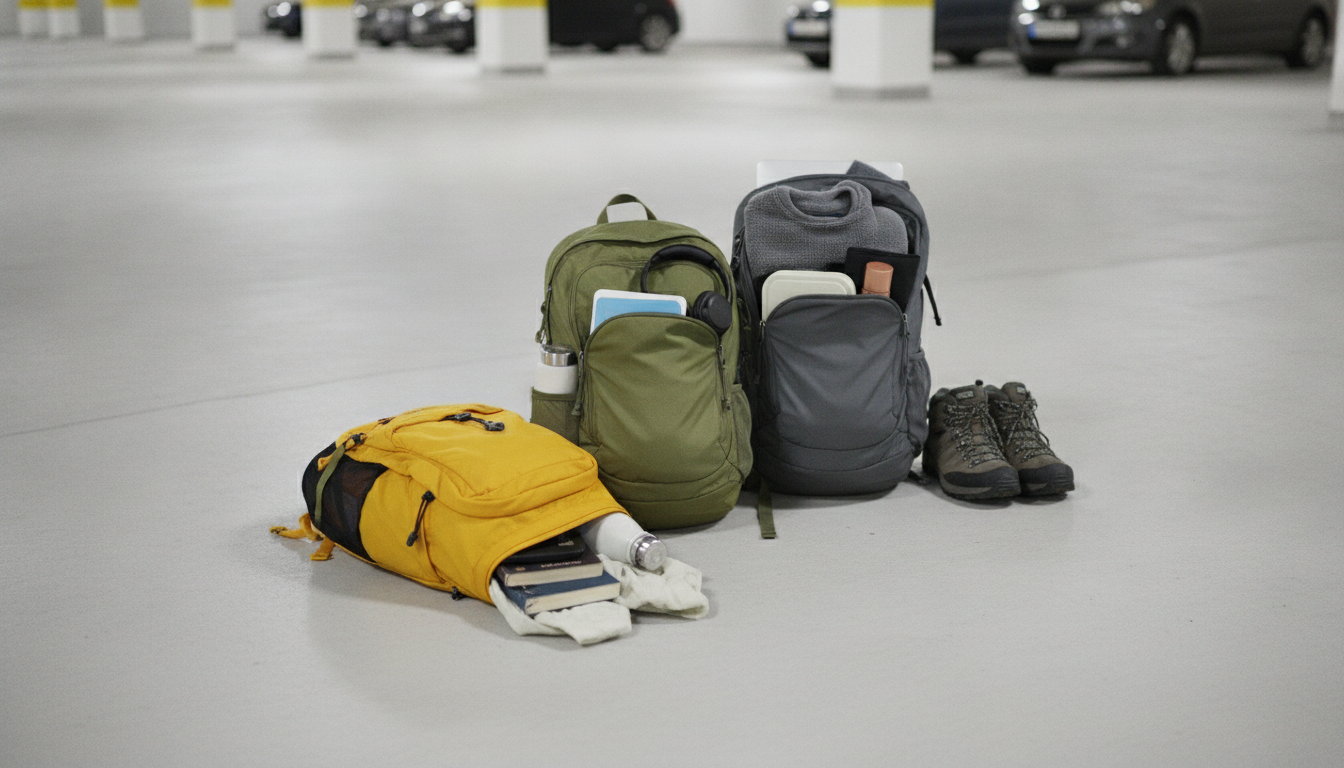
A daypack’s capacity is the amount of gear it can hold, usually measured in liters (L). Most daypacks fall in the 10–30L range, with 15–25L being the common “sweet spot” for everyday carry and short hikes. The right capacity depends on how long you’re out, what you carry, and whether you need room for bulky layers, food, or extra equipment.
Best for short errands, commuting light, or quick walks. This size typically fits a small water bottle, phone/keys/wallet, a light layer, and a few small essentials. It can feel tight if you add lunch, a camera, or a thicker jacket.
A versatile size for daily use. It can usually handle a notebook or small laptop/tablet, chargers, snacks, a compact rain shell, and a water bottle. Many people find this capacity balances slim profile with enough space for “just in case” items.
Ideal when you need extra clothing, more food, a larger hydration bladder, or items like a small first-aid kit and packable insulation. A 25–30L daypack also works well for travel days when you want room for layers and souvenirs without jumping to an overnight pack.
Start with what you carry most often, then add space for the bulkiest item you regularly pack (like a puffy jacket). If you often bring lunch, a tech pouch, and an extra layer, 18–25L is usually comfortable. If you’re truly minimalist, 10–15L can be perfect. If you’re frequently outdoors for 6–10 hours, 22–30L provides flexibility without feeling oversized.
For a deeper breakdown of sizes and use cases, visit https://chicarena.shop/what-is-the-capacity-of-a-daypack/.
For most day hikes, 20–30L works well because it holds extra water, food, and layers. Short, fair-weather hikes can be comfortable with 15–20L if you pack light.







Leave a comment